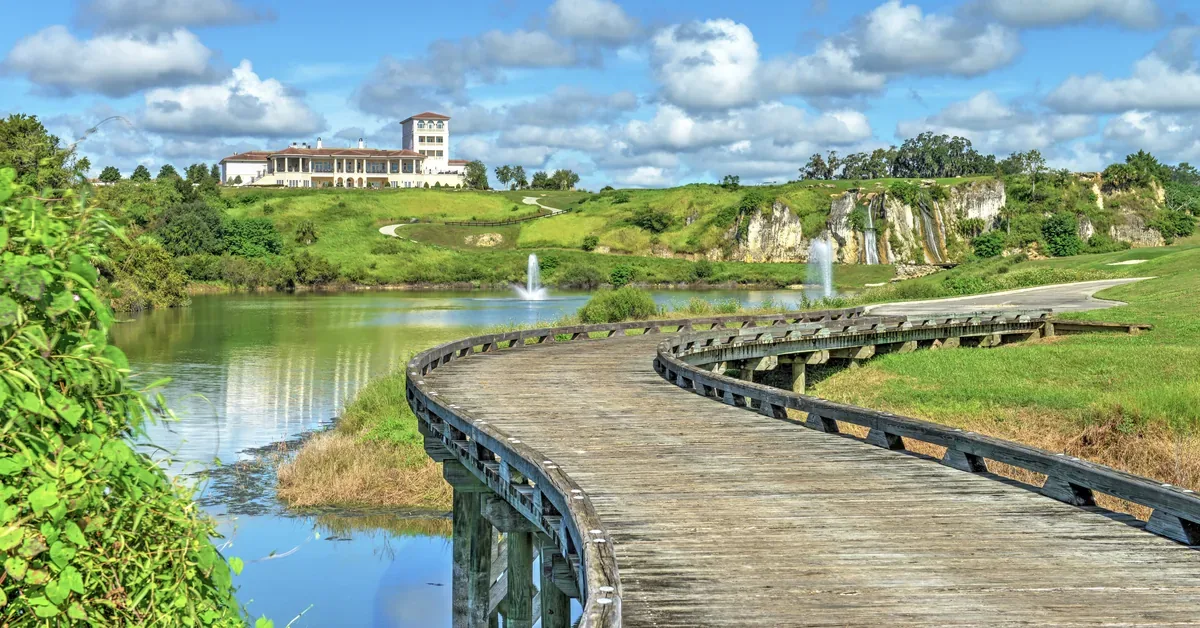
A former limestone quarry is an unlikely starting point for a Florida golf course. At The Club at Iron Lake in Ocala, the 18-hole layout follows spring-fed quarry lakes, exposed rock and changes in elevation that are less familiar on the state’s coastal courses. The land is central to the golf rather than simply a backdrop for it.
The setting also makes IronCrest, the private-club residential community developing around the course, worth examining. Its clubhouse and golf operation are already in use, while the first residential phase is progressing separately. That sequence gives prospective residents an existing club to assess rather than relying entirely on a presentation of what a club might eventually become.
For a private-club reader, two subjects warrant a closer look: the way Ocala’s landscape affects the game, and the distinction between an established golf and social operation and the homes planned around it.
The Course Takes Its Character From the Quarry
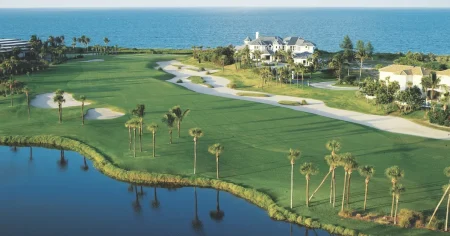
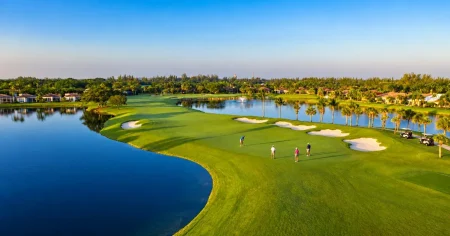
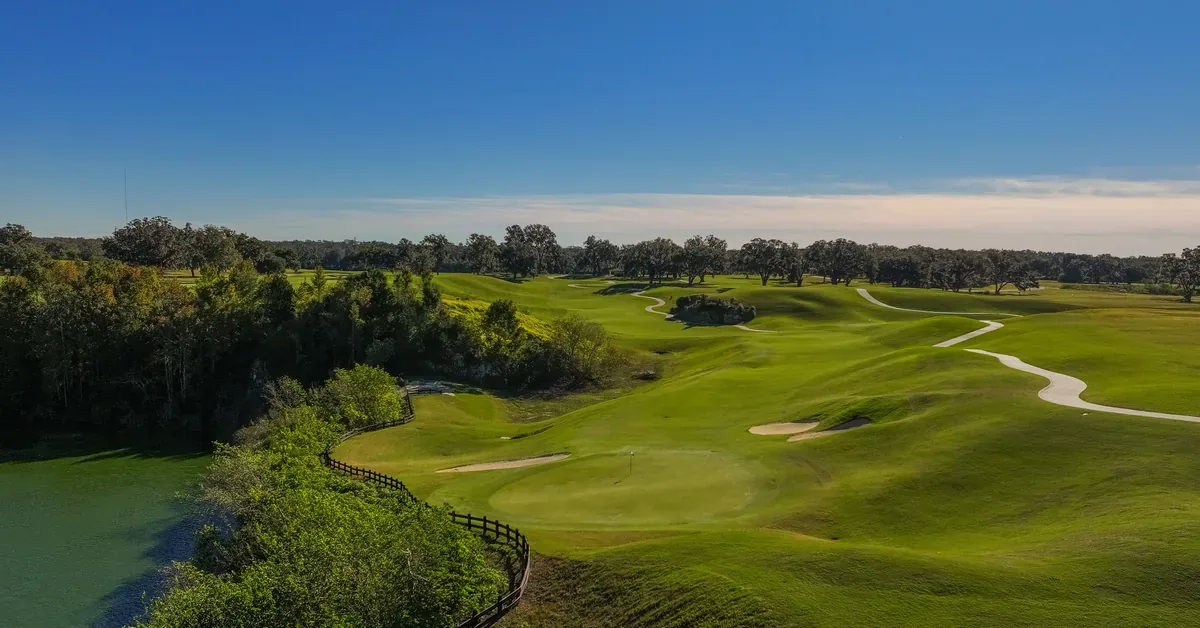
At The Club at Iron Lake’s golf course, limestone quarry walls, water and elevation changes shape the visual and strategic character of the 18 holes. The route moves through a former quarry site rather than the flatter, more conventional terrain commonly associated with Florida golf. Players encounter a course whose natural features have a direct bearing on how a hole is read and approached.
The club also maintains a driving range, putting greens and short-game practice areas. Professional instruction, organized play, leagues and tournaments are part of its stated golf program. Those details establish a working golf operation; they do not, without participation records, establish how often individual members play or how successfully programs connect newcomers with regular groups.
For golfers comparing private clubs, the meaningful questions begin with the round itself. Does the terrain continue to present interesting decisions after the first visit? Are practice and instruction useful in the context of that course? The quarry setting makes the question of repeat play especially compelling because its character comes from the land, not a themed architectural treatment.
Ocala’s Sporting Identity Reaches Beyond Golf
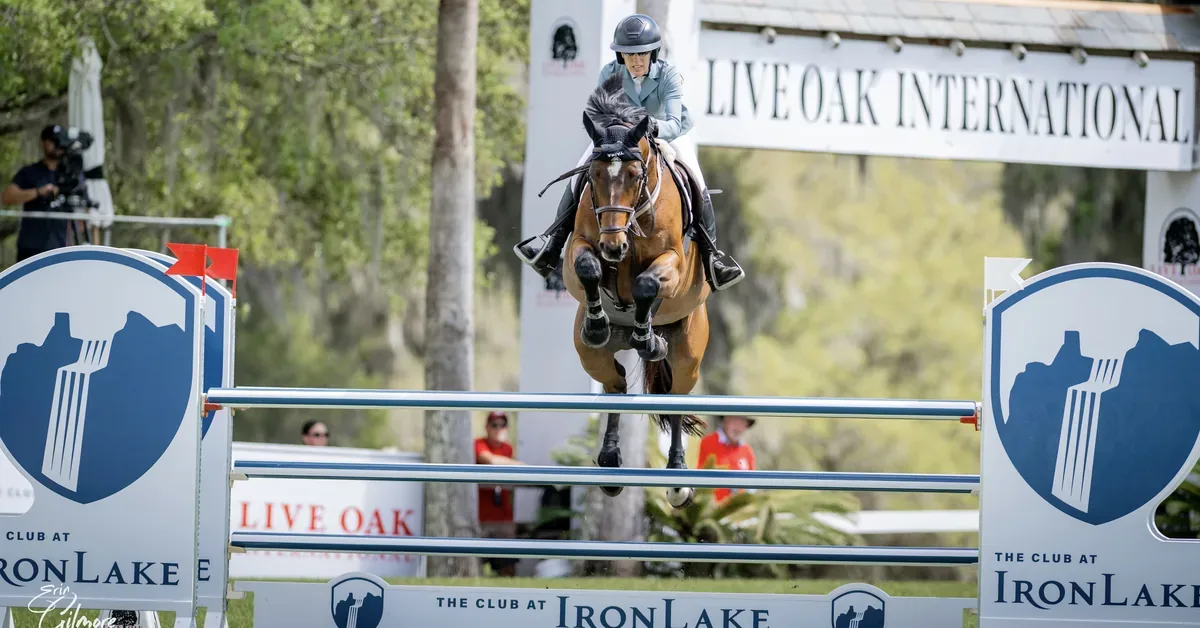
Ocala and Marion County have long been associated with thoroughbred breeding, training and equestrian competition. The World Equestrian Center and Florida Horse Park give that identity a public presence through sporting events and equestrian facilities. Even visitors with little personal involvement in horses encounter a region in which the equestrian industry is part of the local character.
That context is useful when considering a club such as IronCrest. The property’s limestone landscape is one distinction; its position within an established equestrian region is another. Neither automatically predicts private-club membership demand, but both give Ocala a recognizable identity apart from Florida’s beachfront resort markets.
There is evidence of wider residential attention to the area, although it needs careful interpretation. The U.S. Census Bureau estimated Marion County’s population at 442,660 in July 2025, up 17.8 percent from its April 2020 estimates base. Redfin’s Ocala search data for April through June 2026 recorded inbound interest from several Florida metros and from New York, Chicago and Boston. These are measures of population and online home-search behavior, not evidence that a particular group of private-club buyers is relocating.
Where the Golf Course Meets the Social Calendar
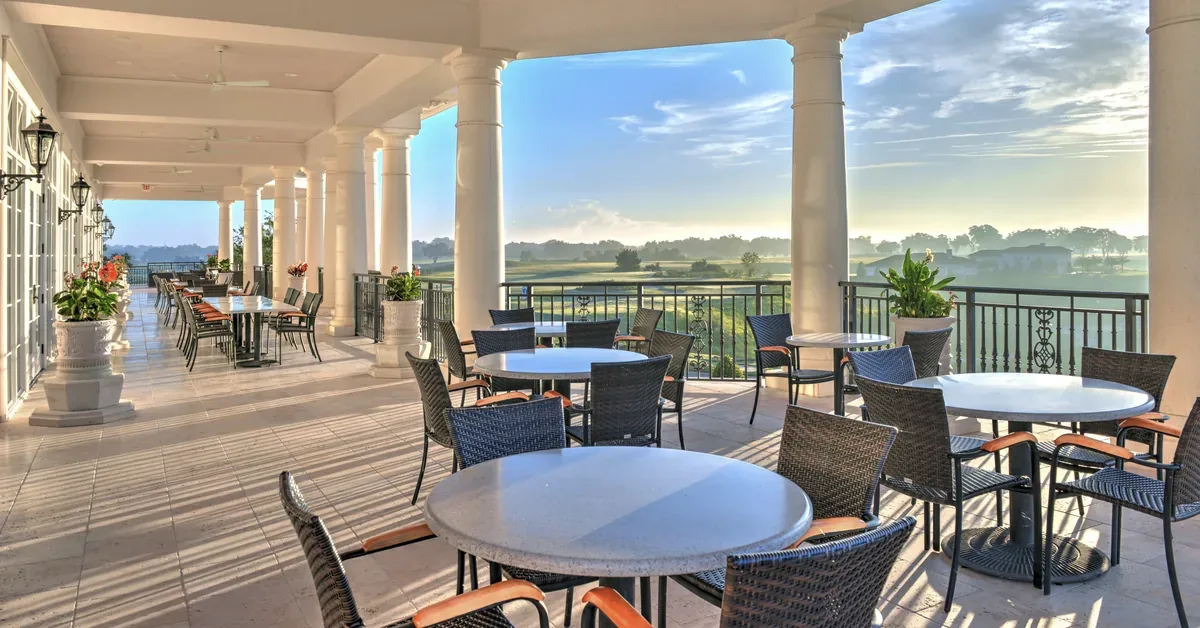
The Club at Iron Lake has an operating 37,000-square-foot clubhouse overlooking the lake and golf course. Its dining facilities include the Triple Bar and lounge, private event spaces and outdoor verandas. Racquet sports, member events and organized golf create a wider range of ways to use the club beyond an 18-hole round.
An operating facility offers a different kind of evidence from an amenities plan. The rooms exist, the golf can be played and programming can be examined in its current form. Yet facilities and published calendars should not be mistaken for proof of member satisfaction, frequency of attendance or an established social bond. Understanding how a club works still calls for questions about actual use, staffing, access and the member experience.
At Iron Lake, the interesting point is the order of development. The club was established before the current IronCrest residential program was introduced. That creates a tangible starting point for people evaluating the place, while leaving the future residential community and its eventual patterns of club participation to be assessed as they develop.
A Residential Neighborhood Built Around an Thriving Club
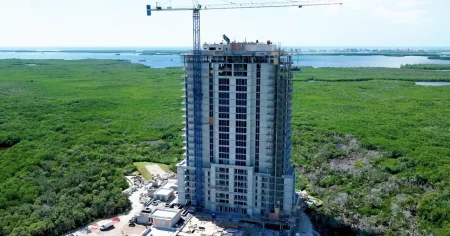
In July 2026, Altamira Development Company announced that Marion County’s Development Review Committee had approved the plat for IronCrest Phase One. The announcement advanced the first residential offering within the planned gated community, which is being developed around The Club at Iron Lake. The approval is a milestone in the residential program, not evidence that the future homes are already complete.
This order reverses a familiar challenge in marketing new golf communities. At projects where club facilities are still proposed, prospective owners must judge an experience that exists mainly on drawings and schedules. At IronCrest, the course and clubhouse can be considered separately from the progress of the housing. Important questions remain about the specific residence types, delivery timing, club membership requirements and rights associated with each ownership category; those should be confirmed against current offering documents rather than assumed from proximity to the club.
The distinction is meaningful for an interested golfer or club member regardless of purchasing intent. An established course has playing characteristics that can be evaluated today. A residential plan has a future timetable and obligations of its own. Treating those two forms of evidence separately provides a clearer picture of the community than treating every proposed component as if it were operating.
Ocala offers more than a geographic alternative to Florida’s coastal private-club markets. At The Club at Iron Lake, the quarry landscape has helped produce a course with a particular identity, while the clubhouse and programming offer an existing basis for judging club life.
IronCrest’s residential story is still developing. The golf course is already there. For readers interested in what actually distinguishes one private-club setting from another, that is the most useful place to begin.