
At BallenIsles Country Club in Palm Beach Gardens, the ’71 Learning Center is a reminder of a notable chapter in golf history. Jack Nicklaus won the PGA Championship on the property’s East Course in 1971, and the center bears the year of that victory. Today it forms part of 16.5 acres of practice grounds supporting three championship courses. The investment also points to a quieter part of the game: the instruction and preparation that take place between rounds, when a golfer is deciding how and when to play again.
The question extends far beyond one private club. The National Golf Foundation’s 2026 industry figures show that 3.3 million Americans played on a course for the first time in 2025, while total on-course participation reached 29.1 million. In an August 2026 analysis, NGF estimated that roughly one in four beginners becomes a committed golfer. That measure concerns national newcomers, not BallenIsles members or private-club retention, and it does not track bookings for a literal second round. It does show how often an introduction to golf fails to become a lasting habit.
A player might leave a first outing with questions about yardage, course etiquette or the next person to play with. Even experienced golfers can find a return to regular play difficult after time away. Instruction is part of the answer, but the way practice connects to an actual game is just as important. The clubs and golf facilities around Palm Beach Gardens offer several ways to examine what happens between an initial interest and a place on the tee sheet.
Confidence Starts Before the First Tee
Before a newcomer worries about a score, there may be uncertainty about the social rules of golf. In April 2026, NGF reported that only about 36 percent of the nongolfers it surveyed expected to feel comfortable around golfers, while roughly half questioned whether they would feel welcomed at a course. These national perceptions should not be mistaken for findings about Palm Beach Gardens club members. They do, however, put a number on the unease that an unfamiliar golf setting can create.
Some of that unease is straightforward to address. A golfer learning the game needs to know which tees are appropriate, how a group maintains pace and when picking up the ball is sensible. The sequence from a lesson to an actual round can introduce questions that never arise on a practice mat. Clear explanations, delivered without making a newcomer feel singled out, can help the course become a more familiar place.
A shorter playing opportunity or a group with similar expectations may make a better next step than an immediate commitment to 18 holes. Those options are relevant to clubs considering how members engage with golf, although the NGF findings cannot establish which private-club approaches work best. The practical challenge is to make the next occasion to play easy to recognize and comfortable to join.

Several Routes Back to Golf in Palm Beach Gardens
The area provides useful contrasts in how golfers develop their games. At the city-operated Sandhill Crane Golf Club, the Get Golf Ready program and other instruction help adults build their skills. The city’s Nest Par 3 offers shorter holes and a 30,000-square-foot putting green, allowing golfers to work on approach play and putting in a format different from a full championship course. Both are public-golf opportunities, with access arrangements distinct from those at private clubs.
PGA National Resort also offers clinics and instruction across experience levels. Its resort model differs from the municipal courses and from BallenIsles’ member-based facilities; the programs should not be presented as interchangeable. Their variety is useful to golfers for a more basic reason. Someone working through a specific weakness may need instruction, while another player may be ready to make the move from practice to regular rounds.
In each setting, the important connection is between what a golfer practices and what the golfer can comfortably attempt next. A lesson may make a new swing feel possible, but a suitable playing opportunity gives the skill a purpose. No available comparison demonstrates that one facility converts newcomers into regular players more effectively than another. The different formats simply make clear that golf can offer more than a single route back onto the course.
The Yardage on the Card Shapes the Round
An enjoyable return often begins with a decision made before anyone hits a shot: where to tee off. A USGA and R&A review of hitting distance published in 2020 warned that many recreational golfers choose tees longer than their abilities warrant. It also found that forward tees at some courses remain too long for the golfers using them. The research predates NGF’s latest participation numbers, but the issue it identifies is familiar to players of many skill levels.
Yardage affects the clubs a player uses into greens, the pace at which a group can move and how often an ambitious hole becomes a sequence of recovery shots. Selecting tees that suit actual hitting distance can make a round both more manageable and more rewarding. There is no reason for that choice to serve as a public measure of a golfer’s standing; it is a practical decision about how to play the course in front of them.
Golf professionals can help by making tee guidance an ordinary part of the conversation, especially with golfers new to a course. The setup must provide workable options, and the guidance should reflect the player’s game rather than assumptions about age or experience. Whether at a public facility or on one of a private club’s championship courses, a round with the right challenge gives a golfer fewer reasons to hesitate before returning.
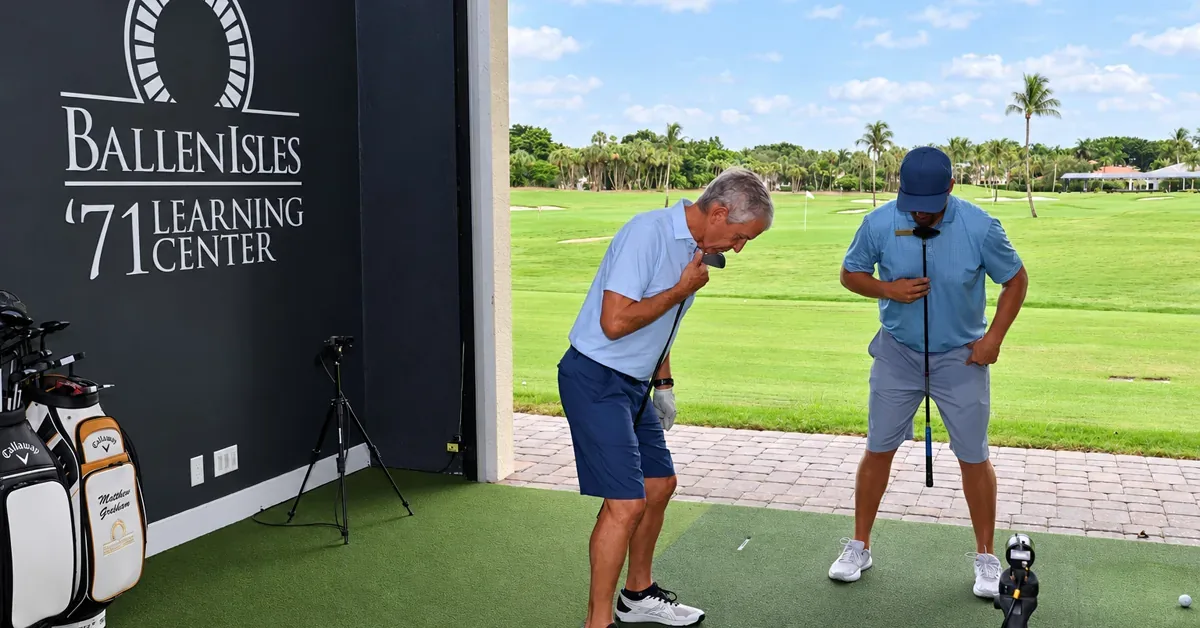
A Learning Center With a Championship Past
BallenIsles’ ’71 Learning Center connects the club’s championship history with the everyday work of improving at golf. The East Course hosted the 1971 PGA Championship, which Jack Nicklaus won, and the club’s 16.5-acre practice complex now accommodates work on both long shots and the short game. Its teaching areas and swing-analysis technology give members the ability to concentrate on particular parts of their game without using an entire round to do so.
The three championship courses give BallenIsles a substantial setting for play, while the practice grounds provide room to prepare for it. The club describes targets, short-game areas and coaching resources designed for work that can be repeated between rounds. Such facilities show the scope of its investment in instruction; they do not, by themselves, establish lower scores, higher participation or how often someone books a second round.
BallenIsles’ membership information also identifies instruction and golf associations among its offerings, although golf privileges vary by membership category. That access can be the starting point for meeting other golfers or finding the next suitable game. The club does not publish a beginner-to-regular-player conversion rate, and its materials do not demonstrate the outcome of any particular lesson sequence. Participation records and member feedback would be needed to make those claims.
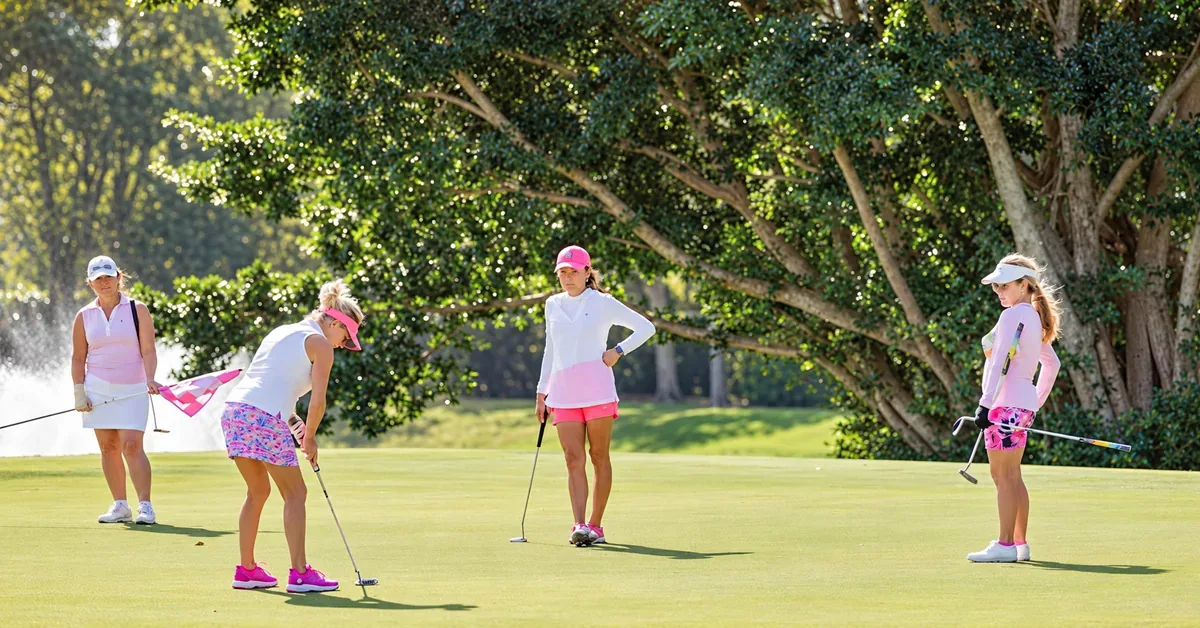
The Fourth Name on the Tee Sheet
When a familiar group needs one more player, an invitation can make returning to golf easier. A regular foursome can turn a round into a standing date, while a new playing partner can make a course feel easier to return to. The social confidence involved is different from the confidence gained on the range, and it develops through opportunities to play with people who make the game enjoyable.
Golf professionals, club associations and scheduled events can help create those introductions, but published descriptions of facilities do not tell us how frequently that happens. NGF’s national beginner figures do not identify the clubs with the most successful retention efforts or establish that a particular program causes repeat play. A club wanting to understand its own results would need to look at participation over time and listen to members about what brings them back.
On the next round, a golfer can put a recent lesson to use at a yardage that suits the day, perhaps with a group that makes the game enjoyable. BallenIsles’ ’71 Learning Center and practice grounds provide space for that preparation. The next tee time is where the work leaves the practice area and becomes part of club life.