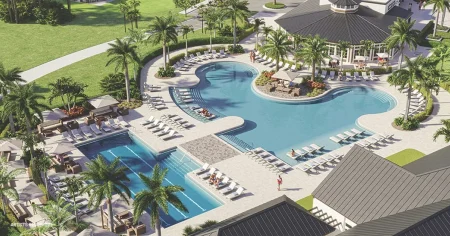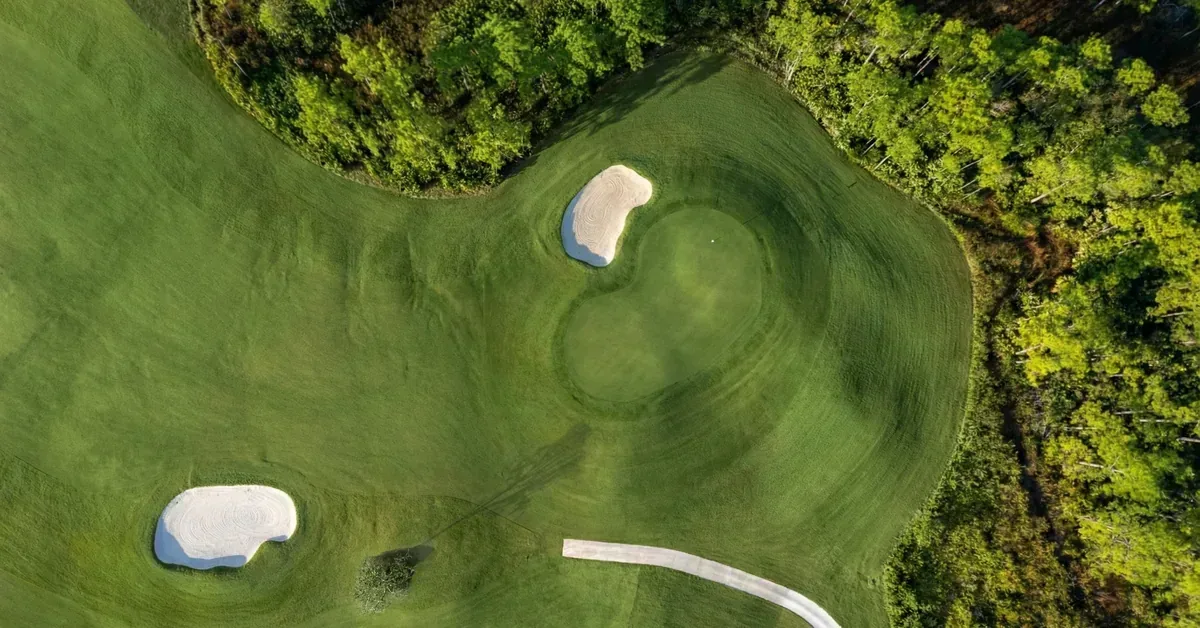
A well-planned golf day at a private club is rarely only about the scorecard. At Glynlea Country Club in Port St. Lucie, the round can begin with an early tee time, move through a Jim Furyk-designed course framed by wetlands and preserve, continue at an aquatic Toptracer range, pause for lunch and end with a look at the residential side of the community.
That broader rhythm is the useful idea behind Glynlea Country Club’s August 17 guide to making the most of a golf day. The original story is practical, but it also shows how the strongest golf-centered club environments work: the course remains the anchor while practice, dining, landscape and real estate give Members more reasons to stay engaged before and after the round.
For The Private Club Report, that connection is particularly relevant because Glynlea is still establishing its identity as both a golf club and a residential community. Cotton & Company’s work with Glynlea Country Club reflects the same challenge from a positioning standpoint: the golf experience has to be understood as part of the larger community proposition, not as an isolated amenity.
Start With a Pace That Leaves Room for the Rest of the Day
Glynlea begins its golf-day advice with something simple: start early. During Florida’s warmer months, an earlier tee time can make the round more comfortable, but the larger benefit is that it creates time on both sides of the golf. Arriving early enough to stretch, hit a few balls and settle into the setting can make the first tee feel less rushed, while finishing with daylight and energy left opens the door to the range, lunch or time elsewhere in the community.
The source also keeps the advice grounded in the basics: sunscreen, a hat, breathable clothing and the tee position that fits the player rather than the number printed on the scorecard. That final point is consistent with the philosophy behind Glynlea’s golf course. The goal is not to overpower the layout. It is to choose sensible targets, maintain a steady tempo and play from a starting position that lets the architecture reveal itself.
Furyk Built the Course Around Playability and Choice
When Jim Furyk began planning Glynlea’s 18-hole championship course, the intended player mattered from the beginning. Conversations with GreenPointe Developers founder Ed Burr and the development team centered on creating a course that could challenge accomplished golfers without stripping the enjoyment out of the game for newer players or higher-handicap golfers.
“It doesn’t have to be 7,400 yards long,” Furyk recalled. “We want some wide fairways. I want folks to be able to bounce the ball into greens and play the ball on the ground.”
That idea is built into the Jim Furyk championship course. Multiple tee positions change both distance and angle. Wide landing areas give players room to keep the ball moving, while angled greens, tucked hole locations and subtle contours create more exacting decisions for golfers who want to attack.
The routing adds another layer of variety with five par 3s and five par 5s. Furyk points to Nos. 5 and 6 as personal favorites: the fifth for the way its green fits naturally into the land, then a drivable par 4 where the golfer has to decide whether to lay up or challenge the wetlands in pursuit of birdie.
“The best compliment that any designer or architect could really receive is that folks had a great time playing their course, that it was playable for all levels and somewhat challenging for all levels,” Furyk said.
Residents Chad and Susan are already testing that balance. Susan jokes that some members of the household are better golfers than others. “Well, I haven’t lost any balls yet, so I say that’s a success,” she said. Chad describes the layout as open and suited to a broad range of handicaps. “The greens are fantastic,” he said. “They’re fast. They’re true.”
The Landscape Is Part of the Golf Experience
The course’s playability is only part of what shapes a round. During routing, Furyk and the development team worked to place as many holes as possible alongside wetlands and preserved natural areas. Very few stretches place homes on both sides of a hole, so the view from the fairway is more likely to move across water, vegetation and open ground than through a continuous residential corridor.
“We really tried to get as many golf holes near those wetlands and natural areas as we could,” Furyk said. “We wanted to use the beauty of Florida.”
For Chad and Susan, who live along the seventh hole, the course reads differently as the day changes. Susan describes sitting on the lanai with a view that mixes golf and preserve. “It still feels a little wild, which is great,” she said. Chad notices the trees, wildlife and sunsets, while Susan points to mornings when fog settles over the course.
Those observations matter because private-club golf is experienced from more than the tee box. In a residential club community, the course can also function as landscape, view corridor and daily backdrop. The value of the routing therefore extends beyond how the holes score; it also shapes how the broader community feels when no one is holding a club.
The Aquatic Toptracer Range Expands What Counts as a Golf Day
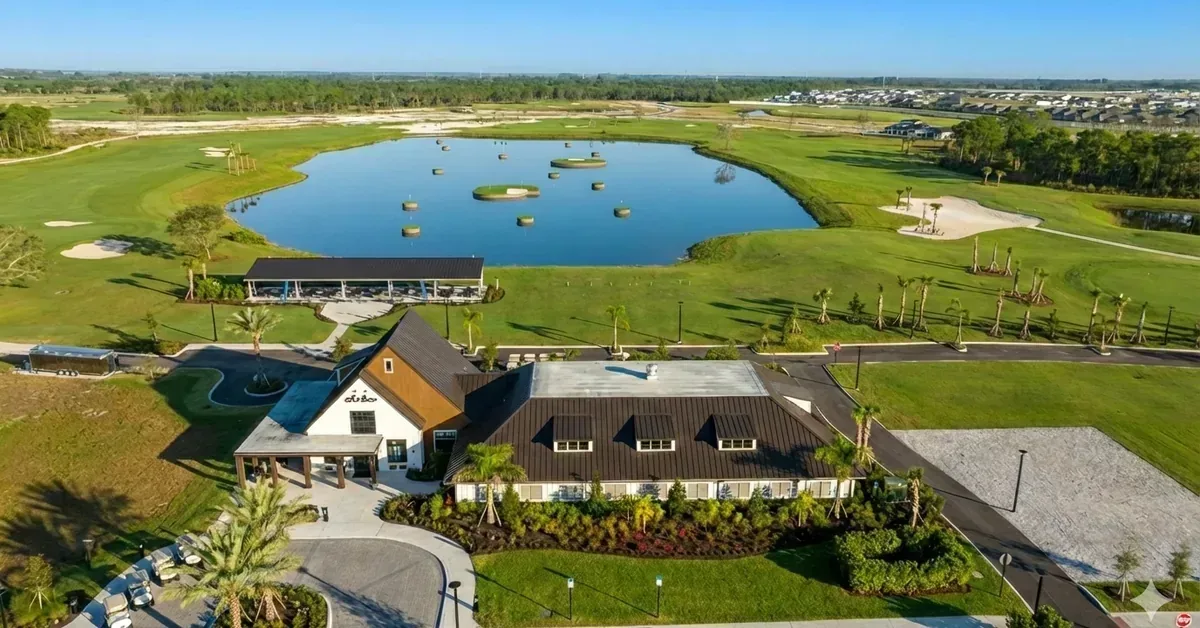
Not every golf experience at Glynlea requires an 18-hole commitment. The Aquatic Toptracer Driving Range creates a shorter, more flexible way to practice or play, with 10 covered hitting bays, floating targets, interactive games and virtual courses.
Brandie and Regan Goan have seen how approachable that format can be. Brandie does not consider herself a golfer, yet the range has become a place where the household can spend meaningful time together. “We’ve taken the kids there and spent almost half a day there, and it was a blast,” she said. During one outing, their younger daughter went from struggling to make contact to, as the family put it, “crushing it.”
For golfers who want more than entertainment, the technology also produces real-time feedback on carry distance, total distance, ball speed, launch angle and shot dispersion. That makes the same range useful for a focused practice session, a warm-up before the first tee or a more casual competitive game.
From an operations perspective, the range broadens the number of ways Members can interact with golf. It gives serious players another training tool while lowering the time commitment and formality for people who may not want a full round. That kind of flexibility can help a club make its central sport relevant across more parts of the week.
A Break at the Tee Box Grille Keeps the Day Moving
Glynlea’s source story does not treat food and beverage as a separate destination from golf. The Tee Box Grille sits beside the Golf Shop and works naturally into the day, whether the stop comes at the turn, after the round or simply as a reason to linger a little longer.
Chef Orlando’s smash burgers and Snake River hot dogs are identified as early favorites. The larger point is less about any single menu item than the role of an easy, informal dining stop in the rhythm of the Club. A player can refuel, compare scores over lunch or move from golf into conversation without making the transition feel like a separate event.
For private clubs, that kind of adjacency can be important. Golf creates the initial reason to arrive, but convenient dining and gathering spaces help turn a tee time into a longer period of Club use.
When the Course Sits Just Outside the Front Door
The original article eventually moves from a golf itinerary to the residential question behind it: what changes when the course is not a destination across town, but part of the place where someone lives?
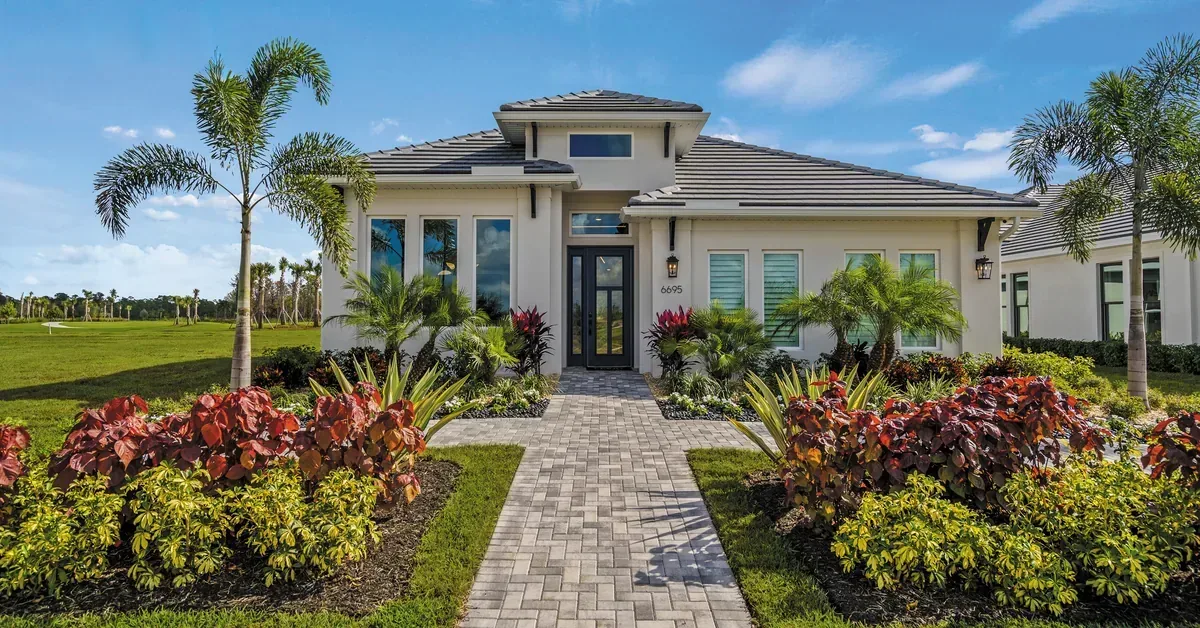
For Brandie and Regan Goan, that possibility emerged after a two-year home search. They had been looking for the right combination of home quality, price and Regan’s long-standing goal of living on a golf course. “We actually didn’t think we were going to be able to until we drove in,” Brandie said. Once they saw Glynlea and the home, the search quickly felt settled.
Chad describes the same connection in a more everyday way: he can leave his front door with his golf bag and walk to the course without getting into a car. That proximity changes golf from an outing that has to be planned into something that can fit naturally into the week.
Glynlea currently presents new homes from Lennar, Perry Homes and Dream Finders Homes, with six designer model homes available to tour through its single-family home collections. The residential piece is significant because it shows why real estate and private club integration matters so much in golf communities: the residence and the Club are not two unrelated products. The ease with which someone moves between home, course, range and dining becomes part of the value proposition itself.
A Visit Shows How the Pieces Work Together
Glynlea’s suggested itinerary is straightforward: book a tee time on the Furyk-designed course, spend time at the Aquatic Toptracer Range, stop at the Tee Box Grille and, for those evaluating the residential community, tour the model homes while on property.
That sequence is useful because it allows a visitor to evaluate more than the quality of a single round. The course shows the design philosophy. The range shows how golf can become more flexible and social. The grille shows how time at the Club can extend beyond play. The homes show what it means when those experiences become part of everyday proximity rather than an occasional destination.
For information about golf, Toptracer Range availability and planning a visit, Glynlea lists the Club team at (772) 242-6892. Current residential information and model-tour details are available through Glynlea Country Club.
The broader private-club takeaway is that a memorable golf day is often built from several connected moments rather than one signature hole. At Glynlea, the round remains the center of the experience, but practice, natural setting, casual dining and residential proximity give the day more range. That is what turns a golf course into part of a larger Club rhythm.